Fall 2025 Helfrich Bicycles Newsletter

Fall 2025 Helfrich Bicycles Newsletter Highlights:

  • Between repairs and on-going education opportunities, this cycling season has been quite busy. I was able to attend both the CADBA East Conference in Secaucus, NJ as well as the Philly Bike Expo. I was also blessed to be trained by master wheel builder Bill Mould in the spring in Alexandria, VA. I also served as tech support for the Covered Bridge Festival ride in late August for the Lancaster Bicycle Club.
  • New shop branded bicycle chain created in 2 oz. Boston round squeezable bottles. Each bottle is $6.99. Ask for one during your next scheduled service appointment.
  • Bicycling trails recommendations in Lancaster County for fall rides, include the Enola Low Grade Trail, Northwest Lancaster County River Trail, Warwick to Ephrata Trail, and the Conewago Recreation Trail.
  • Contact me for any bicycle assembly needs or accessory gift ordering for the holiday season.

Bicycling for Good Knee Health: A Low-Impact Path to Strength and Recovery

Recently, I received a service request from a new client here in Lancaster, PA who was scheduled for a total knee replacement. He wanted to ensure his bicycle was in good working order so that he could use it as part of his post-surgery recovery plan. During my initial bicycle assessment, he shared that his orthopedic surgeon had specifically recommended cycling as one of the best low-impact exercises for improving knee strength, flexibility, and circulation. This is a story I hear frequently, and it underscores the many ways that bicycling can support knee health, particularly for older adults.

Why Bicycling Supports Knee Health

Cycling offers a combination of steady movement, joint control, and low-impact resistance that makes it an ideal form of exercise for those with knee concerns. Unlike walking or running, which can produce high-impact forces that stress the joints, cycling allows the knees to move smoothly through a controlled range of motion. This gentle pedaling action strengthens the muscles surrounding the knees, particularly the quadriceps and hamstrings, without placing excessive pressure on the joints themselves.

Regular cycling can also improve joint lubrication, increase circulation, and reduce overall stiffness. For older adults, including those who are retired or managing chronic conditions such as arthritis, cycling can help maintain independence, physical function, and overall well-being.

The Importance of Proper Saddle Height

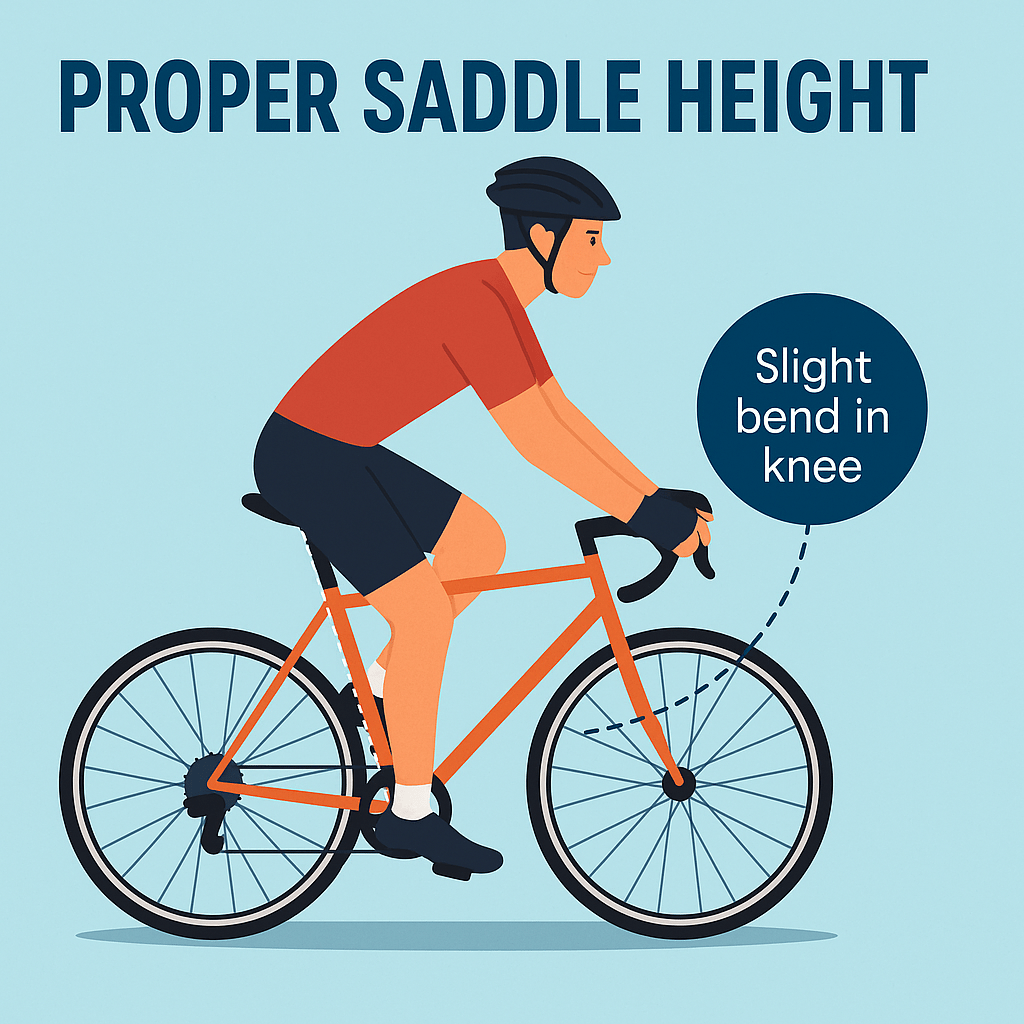
One often overlooked but critical factor in cycling comfort and knee health is proper saddle height. A saddle that is too low can force the knees to bend more than necessary during each pedal stroke, which increases stress on the front of the knee and may lead to pain. Conversely, a saddle that is too high can cause the leg to overextend, resulting in discomfort behind the knee or in the hamstrings.

As a general guideline, your leg should have a slight bend at the knee when the pedal is at its lowest point in the rotation. It should not be fully straight or overly compressed. During bicycle tune-ups, I always assess and adjust saddle height, especially for clients who are recovering from knee surgery or managing pain. Even small adjustments can provide significant relief and improved comfort during rides.

Getting Back on the Bike Safely

For individuals recovering from surgery or coping with joint pain, a properly tuned bicycle can make a substantial difference in mobility and recovery. It is advisable to begin with short, easy rides on flat terrain. A bicycle with upright handlebars and a wide saddle can offer greater comfort. Riders should also ease into cycling gradually and consult with their medical providers to ensure they are progressing safely.

If you need help preparing your bicycle for regular riding, I offer mobile repair and tune-up services. I can help ensure that your bicycle is safe, comfortable, and ready to support your knee health journey. Feel free to make an appointment with me.

Your body and your knees will be better for it.

Has Your Bike Been Hibernating? How to Get It Ready for the Riding Season

Now is the perfect time to dust off your bicycle and get it ready for the spring riding season in Lancaster and York Counties. Whether your bike has been sitting in a barn, garage, or shed, a few simple and affordable maintenance steps can make it trail-ready for Central Pennsylvania’s scenic routes.

  • TIRES & TUBES: Bicycles that sit for a long time will most assuredly lose air from the tires. In most cases, simply pumping up the tires with a floor pump will get you back in gear and you do not need tube replacements. If you have Schrader tube valves (like what you have on your car), you can also use air pumps available at gas stations, convenience stores, and DIY car wash facilities. However, be careful not to put in too much air pressure in too fast as you can make your tubes explode. Tire inflation numbers are typically listed on the sides of the tires.
  • FRAME WIPE DOWN AND CLEANING: Keeping your bike’s frame clean isn’t just about looks; it helps protect the paint, prevents rust, and makes it easier to spot wear and tear. A quick wipe-down and a deeper clean when needed will keep your bike in great condition. Use a dry microfiber cloth or soft brush to remove dirt, dust, and grime from the frame. Mix mild dish soap with water and use a soft sponge or cloth to gently clean the frame. Avoid high-pressure water, which can force moisture into bearings. Use a damp cloth to remove soap residue, then dry thoroughly with a clean towel to prevent water spots.
  • CHAINS: If your chain isn’t completely rusted and still rotates, applying chain lube is essential. Always use a lubricant specifically designed for bicycle chains. Avoid motor oil, WD-40, cooking oils, or grease. While some specialty lubes can be expensive, a basic, budget-friendly option works just fine. You can find these online, at big box and hardware stores, or in my mobile shop. Apply one drop per link, ensuring the lube penetrates between the pins and rollers. Wipe off excess lube by wrapping a rag around the bottom of the chain and slowly rotating the cranks one full cycle. Avoid lubing the outer plates; this doesn’t improve performance and attracts dirt. Reapply lube approximately every other ride, and clean your chain as needed before reapplying. A well-lubricated chain extends the life of your drivetrain and keeps your ride smooth.

Regular bike maintenance is key to a smooth, safe, and enjoyable riding season. With just a little effort, you can get your bicycle ready for the road or trail. However, if your bike needs extra attention or you’d rather skip the hassle, I am here to help. My mobile bicycle repair service brings expert care right to your doorstep, ensuring your bike is in top shape without the inconvenience of a shop visit. Schedule a service with me today and get back to riding with confidence. 🚴‍♂️

Is an E-Bike the Right Bike for You?

Buying an e-bike isn’t the right choice for everyone—it depends on your unique circumstances, preferences, and needs. To help you decide if an e-bike is the right fit for you, here are 10 important factors to consider:

  1. High Initial Cost: E-bikes are generally more expensive than traditional bicycles. The cost can be a significant, especially if you are not planning to use it regularly. These can generally retail for at least $1,000 for one that’s not a name brand. E-bikes from brand name manufacturers can easily retail for $2,500 and more.
  2. Maintenance and Repair Costs: E-bikes have more complex systems than standard bikes, including batteries, motors, and electronic controllers, which will lead to higher maintenance and repair costs. Bike repair shops are going to bill a job based upon the time and parts needed. Just like taking an automobile to your mechanic, a bike shop will generally charge you simply for diagnosing a problem even before any repairs are done. I have heard many of my bike tech colleagues say that have had to charge $250+ for diagnosing an issue even before fixing anything given the time involved, particularly if they have to call a manufacturer. This can be especially true if you have a cheap e-bike. That’s why many bike shops won’t touch anything that wasn’t from the brand sold from their shop given what they sell will have direct warranty and tech support from the manufacturer. Random generic e-bikes manufactured in China and sold on Amazon may provide zero warranty and support.
  3. Battery Life and Replacement Costs: The battery is one of the most expensive components of an e-bike. Over time, the battery will degrade and require replacement, which will easily cost hundreds of dollars. Riders who use an e-bike essentially like a motorcycle and never pedal will certainly burn through the life of the battery much quicker. Many e-bike riders get a huge surprise when they find that a battery replacement with labor can easily be a $500 bill.
  4. Limited Range: E-bikes are limited by their battery capacity. For longer rides, you might run out of power and have to pedal without electrical assistance, which can be challenging if the bike is heavy or you’re not physically prepared for it.
  5. Charging Time: E-bikes require several hours to charge fully. This can be inconvenient, especially if you forget to charge the bike before needing to use it.
  6. Weight: E-bikes are significantly heavier than traditional bicycles due to their motor and battery. This can make them harder to transport and maneuver, especially if you need to carry the bike up stairs, lift it onto a bike rack, or put it in a truck bed.
  7. Legal Restrictions: Some regions have legal restrictions on e-bikes, such as speed limits, age requirements, or prohibitions on using bike paths. These restrictions can limit where and how you can use an e-bike. Additionally, some municipalities may prohibit having an e-bike, and even e-scooters, within your home, particularly if you are a renter. Also, given some of the safety issues with e-bike battery fires that have occurred (and other rider safety concerns that can make a bike mechanic liable), various insurance carriers will not issue policies for bike shops to fix them.
  8. Security Concerns: Due to their value, e-bikes are a more attractive target for theft than traditional bikes. This necessitates investing in high-quality locks and potentially insurance, adding to the overall cost.
  9. Environmental Impact: While e-bikes are more environmentally friendly than cars, they still require electricity to charge, which may come from non-renewable sources. Additionally, the production and disposal of batteries pose environmental challenges and extra costs.
  10. Reliability: Relying on an e-bike for commuting or recreation can lead to a decrease in physical fitness levels compared to pedaling a traditional bicycle. Additionally, technical issues can leave you stranded if you’re not prepared to pedal home.

These reasons are not meant to discourage e-bike ownership universally but to highlight considerations that might make them less suitable for some individuals than others.

New Rivendell Clem Smith Jr. Assembly

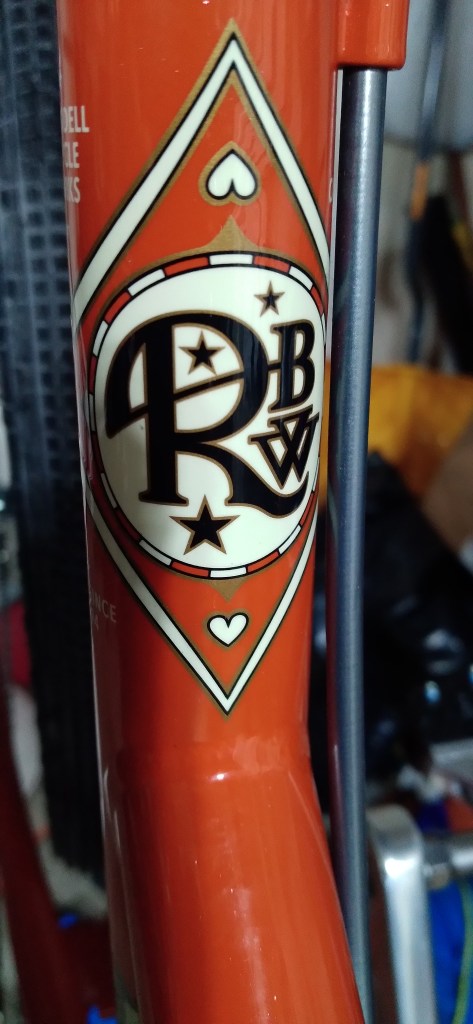
I was contacted by Grant Petersen from Rivendell Bicycle Works to see if I would be able and willing to assemble a custom bike for a customer in the local Lancaster-Lebanon Area. The bike would be assembled initially at the Walnut Creek, CA shop and test ridden. Then it would be disassembled and packed for shipment. Given the handywork skills of the buyer, he would install and finish the handlebar handgrips himself as Rivendell sent a few different options for him.

The bike and accessories arrived in two separate packages to my business address, and I started the process of unpacking everything for assembly. Given the freezing temperatures outside, I found it more comfortable to assemble the bike inside my garage shop rather than in the mobile shop.

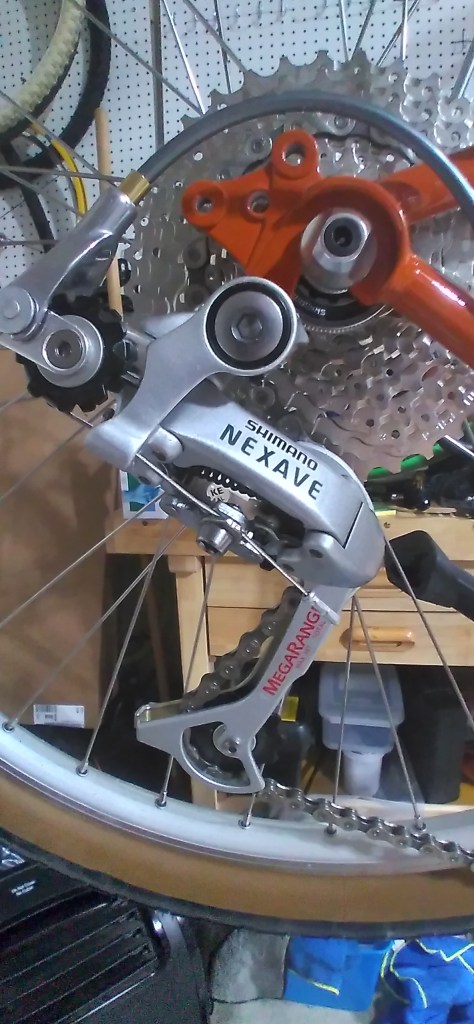
After carefully freeing the bike from the box and protective packaging, I was able to put it on the stand and start assembling it. The various Nitto components and the Shimano Nexave rear derailleur were gorgeous. The rear derailleur was activated by a wonderfully crisp friction shifter. The quill stem, handlebars, seat tube, and pedals installed very easily.

After putting on the front wheel and leather Brooks saddle, it was time to put on the front rack and rear bag. The customer ordered a few extra bicycle bags that he would place on himself once he received the bike. It was quite the pleasure to see a newly assembled Rivendell.

It was really a pleasure to be able to deliver the bike to the customer because he was very excited to see the final product. I am very grateful to Grant and Rivendell Bicycle Works and Tom for the opportunity to assemble and delivery such a wonderful bicycle!

New Bicycle Assembly Tips

Many bicycle manufacturers are now selling and shipping new bikes directly to consumers (i.e., D2C) rather than through a retail shop. I was contacted by a father who needed to have a bicycle assembled for his daughter as a Christmas present. He had the bike shipped to his home and scheduled me to assemble it for him.

  1. PACKAGE CONTENTS – When you receive the box and open it, make sure that all of the parts and accessories are included, including assembly and safety manuals. Some bicycle manufacturers will include a variety of inexpensive tools needed in the box with the bike, particularly for kids’ and less expensive bicycles. The racing and higher-end bicycles (i.e., expensive) will need specialty bicycle tools.
  2. TOOLS – Before you start, get together all of the necessary tools. Usually, you’ll need a set of Allen keys or hex wrenches, a pedal wrench or a 15mm open-ended wrench, and sometimes a torque wrench to ensure that components are tightened to the manufacturer’s specifications. It’s a good idea to refer to the bike’s manual to confirm the exact tools needed for assembly.
  3. ANTI-SEIZE COMPOUNTD, GREASE, & THREAD LOCKER – Generally, if you have metal contacting metal, there should be some sort of grease or lubricant applied to the parts. A small amount of anti-seize compound on pedal threads is a smart install step to make it easier to remove the pedals in the case you ever need to replace them. Liquid thread locker should be used on various types of bolts for various components that thread into the frame as well as handlebar bolts. Grease on the handlebar stem into the headtube is smart as well as with the seatpost into the seat tube. Failing to do this can potentially cause these components to oxidize together over the years, which is called “galvanic corrosion.” This can make it extremely difficult to remove and replace various parts, particularly the seat tube and handlebar stem. In many cases, the stem is already installed by the factory when it’s shipped.
  4. PEDALS – It is crucial to make sure that you install the pedals correctly. Typically, they will be marked with a small “L” and “R” sticker near the threaded spindle or actually stamped on each spindle end. While the right pedal installs like a standard bolt, “righty-tighty,” the left pedal is left-hand threaded, so it installs “lefty-tighty.” Each pedal threads toward the handlebars. The left pedal is manufactured like this so it does not inadvertently fall off when pedaling if it was right-hand threaded.
  5. HANDLEBARS – Attaching the handlebars is usually one of the first steps. Ensure the stem (the part that connects the handlebars to the fork) is properly aligned with the front wheel. The height of the stem should never be higher than the marks inscribed on the stem itself. When tightening the stem bolts, it’s crucial to do so in a cross pattern to ensure even pressure. If your bike has a threadless headset, make sure the headset spacers are correctly placed before tightening the stem cap. Over or under-tightening can affect steering or damage components and even lead to potential injury for the rider.
  6. SEAT AND SEATPOST – When installing the seatpost, check if your bike frame requires a specific type of grease or carbon assembly paste. This helps prevent the seatpost from seizing in the frame. Adjust the seat height to a comfortable level, and ensure it’s aligned straight with the frame. As with the handbar stem, the height of the seatpost should never be higher than the marks inscribed on the seatpost itself. Tighten the seatpost clamp to the manufacturer’s recommended torque settings.
  7. WHEELS – If your bike has quick-release wheels, ensure they are properly seated in the fork dropouts. The lever should be on the left side, or “non-drive” side (the side without the chain and gears) of the bike and tightened to the point where it leaves an imprint on your palm when closed. For bikes with thru-axles, make sure they are threaded correctly and tightened to the recommended torque. Check that the tires are inflated to the pressure indicated on the tire sidewall.
  8. BRAKES AND DERAILLEURS – If your bike has disc brakes, be careful not to touch the brake rotors or pads with oily fingers, as this can affect braking performance. For bikes with rim brakes, ensure the brake pads are aligned with the rim and not rubbing on the tire. Adjust the front and rear derailleurs for smooth shifting, following the manufacturer’s guidelines. This can be a bit tricky and might require some patience and fine-tuning.
  9. FINAL CHECKS – Once everything is assembled, do a thorough check. Ensure all bolts are tightened to the correct torque, and that there are no loose parts. Check the brakes and gears in a safe area before going for a full ride. It’s also a good idea to re-check everything after your first few rides, as new bikes can settle and require minor adjustments.
  10. SAFETY – Remember, safety is paramount. If you’re unsure about any part of the assembly process, always feel free to reach out to me or make an appointment with me to assemble the bicycle for you. Also, you can have the bicycle shipped to me and I will deliver the assembled bike to you.

Pedal into Happiness: Hassle-Free Bicycle Assembly for Your Holiday Gifts

The holiday season is upon us, and there’s nothing quite like the joy of gifting a bicycle. However, I understand that assembling a bike can sometimes be a challenging task, especially when you’re trying to keep it a surprise for your loved ones. That’s where Helfrich Bicycles comes to the rescue with my hassle-free bicycle assembly service.

Why Choose Helfrich Bicycles?

At Helfrich Bicycles, I believe in making your holiday experience as stress-free as possible. I am here to ensure that your bicycles are assembled with precision and care and delivered to you ready to bring smiles to the faces of your gift recipients. My transparent pricing ensures that you know exactly what to expect, with no hidden fees.

Pricing Details:

  • Kids’ Bicycles (20″ and smaller): $45.00 + tax
  • Teen and Adult Bicycles (24″ and larger): $65.00 + tax
  • Jumbo bike gift bag (if requested): $9.99 + tax
  • Free delivery after assembly

How It Works:

  1. Request Service: Text or call (717) 842-0494 or email scott@helfrichbicycles.com to request assembly service. You can also make an appointment online HERE by choosing the “Bicycle Assembly Service” option.
  2. Order Online: Simply order your bicycles online and have them shipped directly to Helfrich Bicycles at 590 Centerville Rd. , Lancaster, PA 17602. This is a secure UPS Store location where I receive all of my business packages.
  3. Leave the Assembly to Me: Once your bicycle arrives, I will get to work, ensuring that each component is expertly assembled for optimal performance and safety.
  4. Ready for Gifting: After your bicycle is assembled, I will deliver it to your door. It will be ready to roll, ensuring a seamless and joyful gifting experience.

Why Helfrich Bicycles?

  • Convenience: Save time and effort by leaving the assembly and delivery to me.
  • Quality Assurance: I take pride in our work, ensuring that each bicycle is assembled to the highest standards.
  • Expanded Retail Accessory Options: Enhance your cycling experience with personalized accessories. Working closely with five reputable wholesale suppliers, I have access to an extensive catalog featuring tens of thousands of diverse products. From safety essentials to performance upgrades and stylish embellishments, you can tailor your bicycle exactly to your preferences.

This holiday season, give the gift of adventure without the assembly hassle. Pedal into happiness with Helfrich Bicycles’ Hassle-Free Bicycle Assembly Service.

Friday Bicycle Bits & Tips #2 – Chain Maintenance

Taking care of your bicycle chain is a part of basic maintenance that will extend the life of your bicycle components and provide a better riding experience. This does not have to be an expensive nor complicated process. Generally, a bicycle chain should last for thousands of miles ridden if it is well maintained. However, a poorly treated chain can be quickly ruined and even damage other parts of your bike.

Here are some simple tips to follow to properly maintain your bicycle chain:

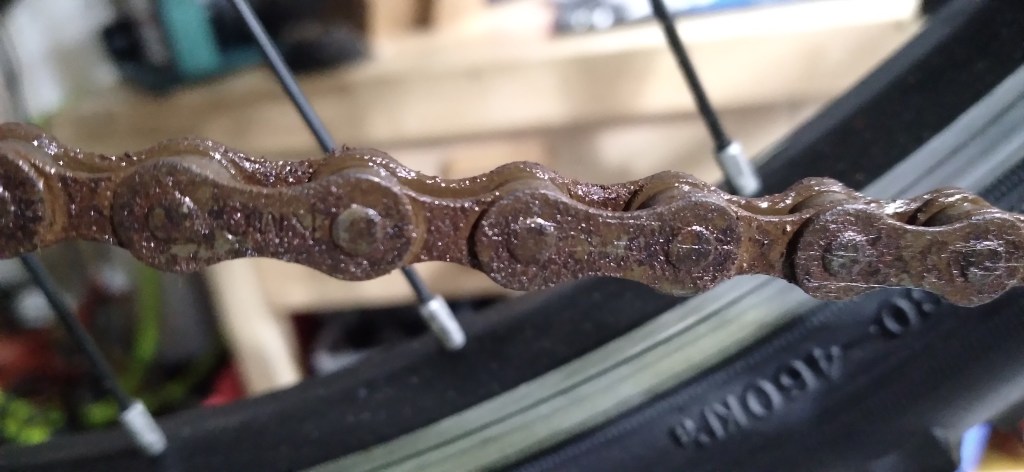
  • Avoid storing the bicycle outside for lengthy periods: A sure way to rust and essentially ruin your chain is to store your bicycle outside in the elements. Using a highly corroded chain will most assuredly damage other parts of your drivetrain, including the front chainring(s) and the rear sprockets. All of my clients that have had their bicycles stored outside for at least one winter always needed a new chain.
  • Clean it with soap and water: If your chain gets grimy from riding in the rain, dusty from crushed gravel, muddy from mountain biking, or just dirty in general, the easiest way to clean it is simply using soap and water. Fill a bucket with some liquid dish soap and water and use a brush to clean it. Use a garden hose or a bucket of fresh water to rinse it. You can also clean it in a DIY carwash stall. Just be careful using the pressure washer as to not damage other parts of the bike. Then simply dry the chain by wiping it thoroughly with a towel. Chamois towels and even old t-shirts can be used. Once the chain is fully dry, then you can lube it as described below.
  • Only use chain lube intended for bicycle chains: Only chain lube designed for bicycles chains should be used. There are various types of bicycle chain lube, and many specialty ones can be pricey. However, using a basic and inexpensive chain lube is going to be fine. You can find these online, at big box stores, and even at hardware stores. I also have a supply for sale in my mobile shop. DO NOT use any type of motor oil, WD-40, cooking oils, or any type of lubricating grease. One drop of chain lube should be applied on each link so that it penetrates between the pins and rollers that connect the chain together; that is all you need to apply. Lube is not necessary on the outside plates of each link. Then you should wipe off the excess lube by holding a rag around the bottom of the chain and slowly rotating the cranks until the chain is rotated one time through the rag. Reapply lube to your chain approximately every other ride. Be sure to clean your chain if needed prior to reapplying.
  • Replace the chain: If you have a particularly rusty or dirty chain, you are better off by simply replacing it. It is not worth the time and effort to attempt to clean it, particularly if it is a recreation-level chain. Additionally, using harsh and potentially dangerous chemicals to clean a chain is not a good idea. A fresh chain will provide a much better and safer ride.

If you need a chain cleaning or potential replacement, please schedule an appointment with me to take care of your needs. I can assess your chain and make various recommendations for the best and most economical way to get you riding again.

Haunted Bike Trails: Exploring Spooky Routes


Lancaster County, PA is home to plenty of spooky places and folklore. One area that is particularly known for the paranormal sightings is the Northwest River Trail from Columbia to Falmouth. The most “haunted” section of the trail is by Chickies Rock just north of Columbia, PA. It is here that there have been sightings of the Albatwitch, the spirit of a man with a red lantern, a shadowy figure of a man with a hat, and other scary specters. If you’re an adventurous cyclist looking for a unique Halloween experience, we invite you to join us as we embark on a journey down this haunted bike trail in Lancaster County. Strap on your helmet, make sure your bike is in top-notch condition, and get ready for an unforgettable ride through history and mystery.

Chickies Rock: The Gateway to the Unknown

Our spooky adventure begins at Chickies Rock, a towering cliff that overlooks the Susquehanna River. During the day, this area is a popular hiking and biking destination with breathtaking views of the river valley. However, as night falls and the moon casts eerie shadows, the atmosphere changes entirely.

Local legends tell of the Albatwitch, a creature described as a small, ape-like humanoid with a penchant for stealing apples. According to those who claim to have seen it, this elusive creature has glowing red eyes that pierce through the darkness. The Albatwitch is said to reside in the dense woods surrounding Chickies Rock, making it the perfect starting point for our haunted bike trail adventure. Don’t forget to celebrate the annual Albatwitch Day, which is held annually in October with paranormal-related lectures, music, and food.

As you set off on the Northwest River Trail, the sense of anticipation is palpable. The trail, which follows the old Pennsylvania Canal, is enveloped in a canopy of trees that seem to whisper secrets of the past. Keep an eye out for the spirit of a man by the Point Rock Tunnel who carries a red lantern, a specter that has been reported by many who ventured here after dark. Some say he guides lost souls; others believe he’s a casualty of a railroad accident that occurred at that site in the late 1800s. There are additional reported encounters with a shadowy figure of a man wearing a hat, often spotted near Chickies Rock. Is he a guardian of the past or something more mysterious? It’s a question that adds an extra layer of intrigue to your ride.

Biking Safely Through the Unknown

While exploring haunted bike trails can be an exhilarating experience, safety should always be your top priority. Make sure your bike is in excellent working condition, and carry essential supplies such as a reliable flashlight, bike lights, spare bike tubes, and a fully charged phone. Riding with a group of fellow Halloween adventurers can also add an extra layer of safety and camaraderie to your journey.

Lancaster County’s Northwest River Trail offers cyclists a unique opportunity to blend history, mystery, and Halloween spirit in one thrilling ride. Whether you believe in the paranormal or not, there’s no denying the allure of this haunted bike trails. As you navigate the shadows, remember to respect the environment, the history, and the spirits that may call this trail home. Happy pedaling, and may your Halloween adventure be both spooky and safe!

Friday Bicycle Bits & Tips #1 – Emergency Repair Kits

Most clients that I work with have at least one bicycle break-down story. Most involve a flat tire that they were unable to repair and had to walk a considerable distance to get back to their vehicle or to a spot where a loved one or friend could pick them up. These issues can go from bad to worse depending upon cell phone service availability, poor weather conditions, and the loss of daylight. That is why having a small emergency repair kit on your bicycle is crucial. Below are suggested items to have with you on every ride.

BIKE BAG – There is a wide assortment of bike bags to choose from depending on the type of riding you do. Long-distance bikepackers who may be camping can use large bags called “panniers.” However, most recreational riders only need a small bag that can easily fit under their seat or even be attached to the front of their handlebars. This allows you to carry essential tools and supplies should you need to repair something.

Seat / Saddle Bag

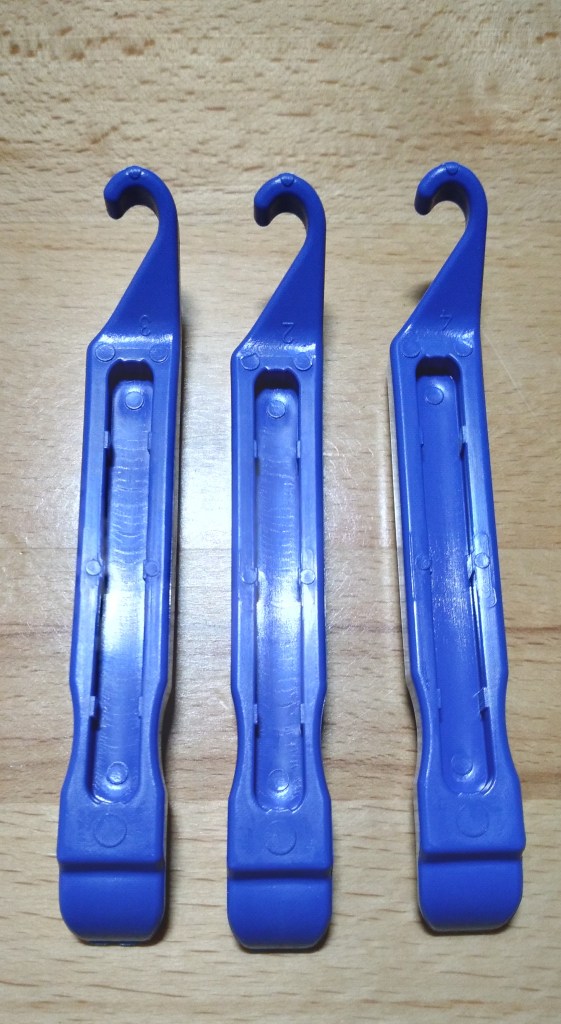
TIRE LEVERS – These are essential for aiding in the removal of a tire from a wheel rim. When a tire is flat, you use these to help free the tire from the side of the rim to allow access to the innertube. The end hook allows you to secure it to a spoke thereby allowing you to use another lever (if needed) to peel the tire off the rim. In most cases, you only need to get one side of the tire off the rim to access the tube. Levers come in different sizes, colors, and are generally inexpensive. My recommendation is to always use levers made from high tensile plastic so they do not bend when used.

Tire Levers

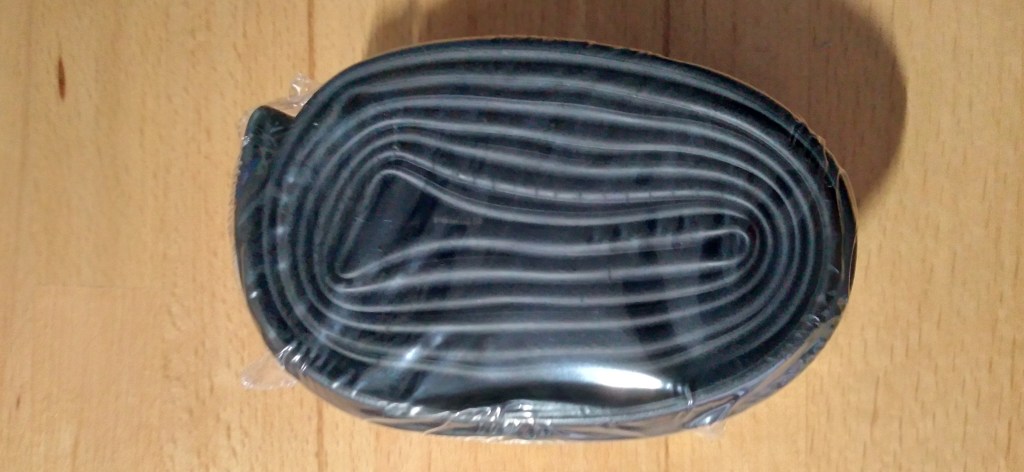
SPARE INNERTUBE – Having at least one innertube on your ride is a smart strategy. Having one assures a complete fix without having to apply a patch on a puncture. Also, a new tube provides a piece of mind in the case you suffer a major blowout that may be too large for a patch. There is nothing wrong with carrying two tubes if the size of your bag will accommodate them. Be sure to have the proper size tube for your tires. You can find sizing by looking on the side of the tires.

Spare Innertube

PATCHES – Punctures can be sealed up with various types of patches. The easiest ones to use are those that are pre-glued and are applied to the puncture like a sticker. Other kits have a small tube of glue and patches to seal up punctures. To cover all your bases, carry an extra tube (as described above) and patches. This helps in a worst-case scenario when both tubes may have punctures.

Innertube Patches

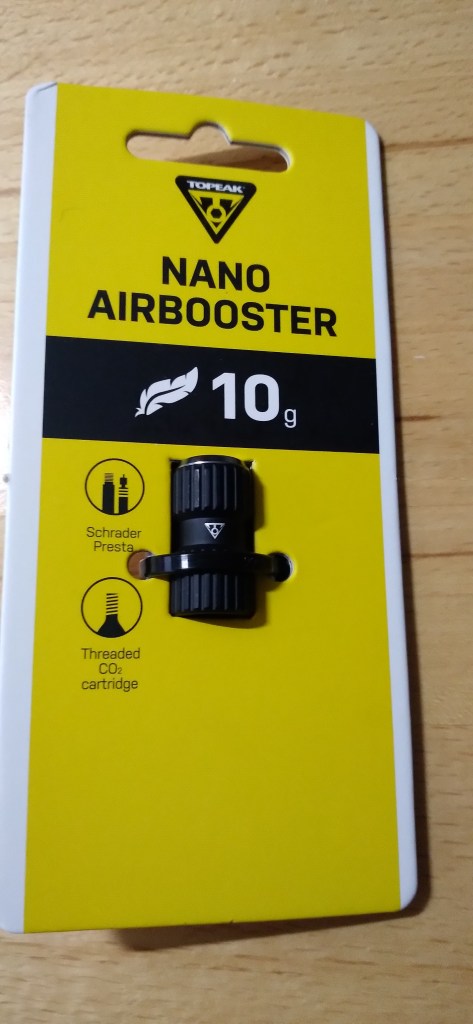
CO2 TIRE INFLATER – An easy and effective way to inflate your tires is with a small CO2 tire inflater. This is a device that a small, compressed air cartridge screws into that then attaches to the tube value. Make sure that you are using an inflater that is compatible with your tire valves. A Presta stem is a skinny stem with a small top nut and a Schrader stem is thicker and the exact type you see on car tires. Many are interchangeable like the one pictured below.

Tube Inflater

Compressed Air Cartridges – These cartridges are the source of air for the inflater. They come in varying sizes and are disposable when emptied. They are not refillable. Using this type of inflater is more portable and easier than carrying and using a frame pump.

Compressed Air Cartridges

MULTITOOL – A folding multitool is handy to have because it has hex wrenches of varying sizes, and in most cases, a Philips and flathead screwdriver. These are helpful to have because the allows you to adjust your handlebars and stem, saddle position, derailleur limit screws, and make other quick adjustments.

Multitool

Aside from the emergency repair items, it’s always advisable to keep other key items in your bag as well, such as cash, a portable cell phone battery with cord, and adhesive bandages. Putting together an emergency repair kit is an easy way to avoid being stranded somewhere on your ride. If you are in the Lancaster, PA area and would like to purchase a complete emergency repair kit for your bike, give me a call or schedule an consultation appointment for me to assess your needs and give you various options I can put together for you. You can also schedule a lesson with me to learn how to make emergency repairs so you are fully prepared during a breakdown. Thanks for reading and be sure to subscribe to this blog below to receive an email with every informational post.