
Recently, I received a service request from a new client here in Lancaster, PA who was scheduled for a total knee replacement. He wanted to ensure his bicycle was in good working order so that he could use it as part of his post-surgery recovery plan. During my initial bicycle assessment, he shared that his orthopedic surgeon had specifically recommended cycling as one of the best low-impact exercises for improving knee strength, flexibility, and circulation. This is a story I hear frequently, and it underscores the many ways that bicycling can support knee health, particularly for older adults.
Why Bicycling Supports Knee Health
Cycling offers a combination of steady movement, joint control, and low-impact resistance that makes it an ideal form of exercise for those with knee concerns. Unlike walking or running, which can produce high-impact forces that stress the joints, cycling allows the knees to move smoothly through a controlled range of motion. This gentle pedaling action strengthens the muscles surrounding the knees, particularly the quadriceps and hamstrings, without placing excessive pressure on the joints themselves.
Regular cycling can also improve joint lubrication, increase circulation, and reduce overall stiffness. For older adults, including those who are retired or managing chronic conditions such as arthritis, cycling can help maintain independence, physical function, and overall well-being.
The Importance of Proper Saddle Height
One often overlooked but critical factor in cycling comfort and knee health is proper saddle height. A saddle that is too low can force the knees to bend more than necessary during each pedal stroke, which increases stress on the front of the knee and may lead to pain. Conversely, a saddle that is too high can cause the leg to overextend, resulting in discomfort behind the knee or in the hamstrings.
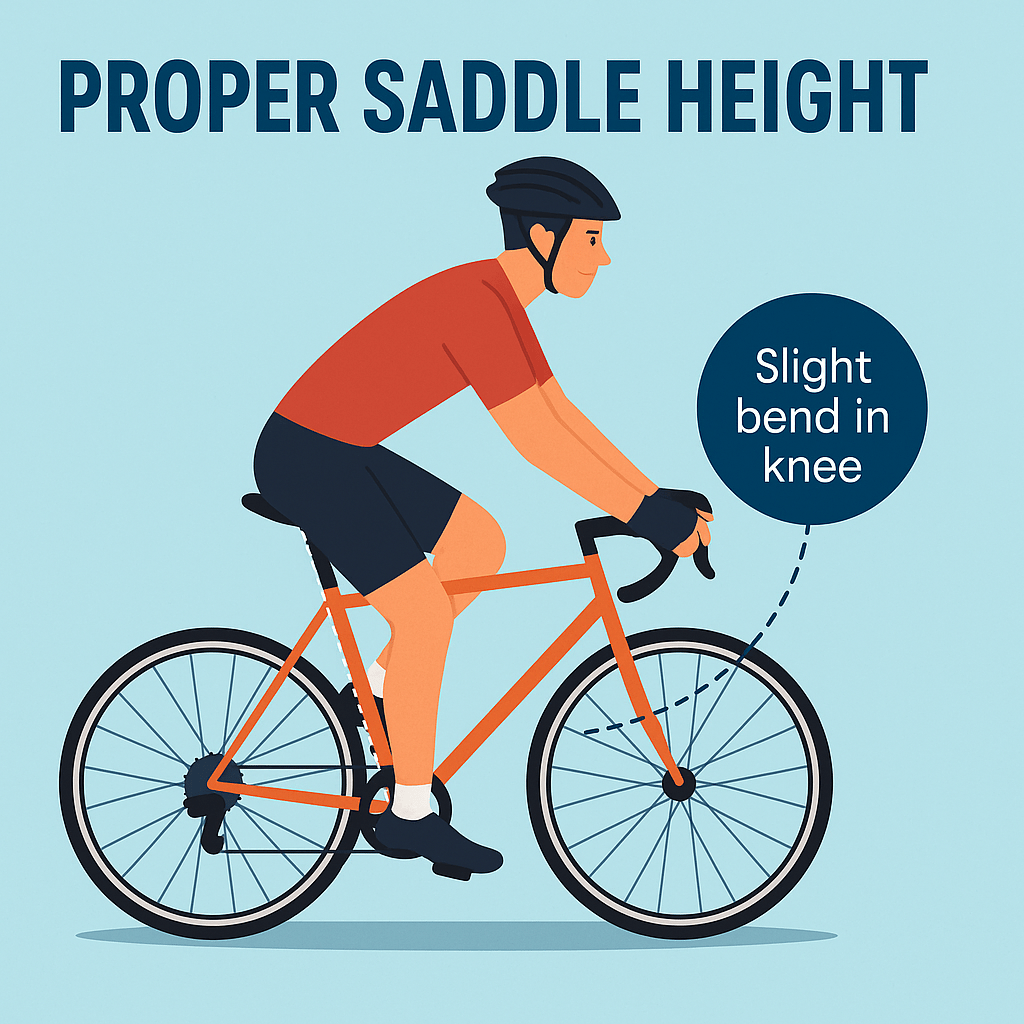
As a general guideline, your leg should have a slight bend at the knee when the pedal is at its lowest point in the rotation. It should not be fully straight or overly compressed. During bicycle tune-ups, I always assess and adjust saddle height, especially for clients who are recovering from knee surgery or managing pain. Even small adjustments can provide significant relief and improved comfort during rides.

Getting Back on the Bike Safely
For individuals recovering from surgery or coping with joint pain, a properly tuned bicycle can make a substantial difference in mobility and recovery. It is advisable to begin with short, easy rides on flat terrain. A bicycle with upright handlebars and a wide saddle can offer greater comfort. Riders should also ease into cycling gradually and consult with their medical providers to ensure they are progressing safely.
If you need help preparing your bicycle for regular riding, I offer mobile repair and tune-up services. I can help ensure that your bicycle is safe, comfortable, and ready to support your knee health journey. Feel free to make an appointment with me.
Your body and your knees will be better for it.

 Helfrich Bicycles